
A prehistoric predator that spent a century gathering dust in a museum drawer has finally been revealed to the world. Researchers have identified a new species of dinosaur, dubbed Invictibellatrix amberina, from a fragment of a skull that was collected on the Isle of Wight back in 1924. Despite being housed at the Natural History Museum in London for decades, the specimen remained unnoticed until a team from University College London used modern CT scanning technology to unlock its secrets.
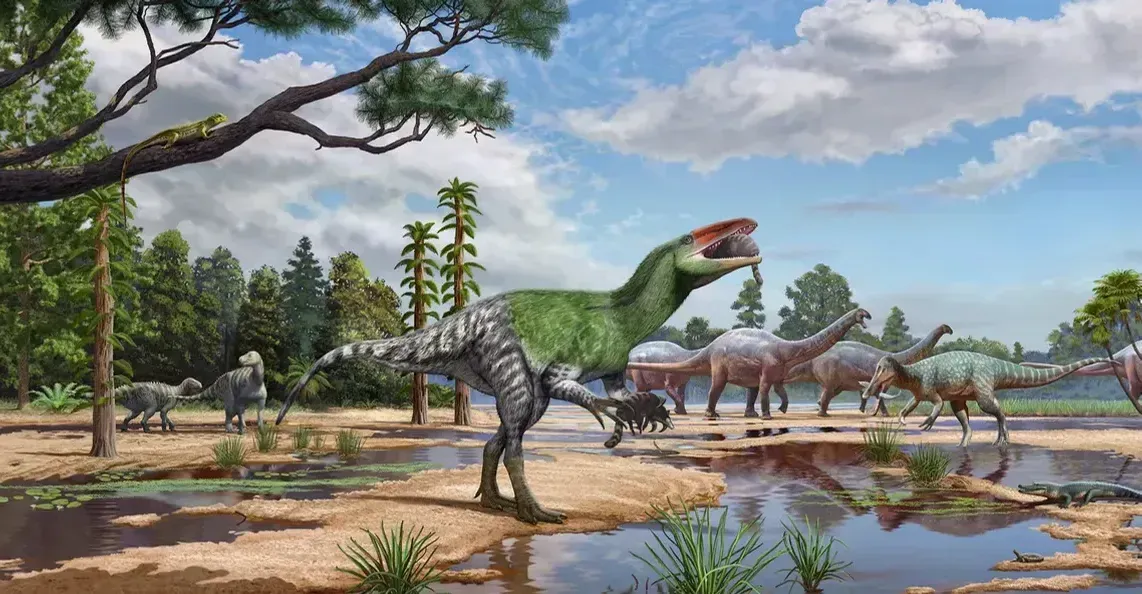
This newly named creature was a distant cousin of the famous Tyrannosaurus rex, belonging to a group of two legged carnivores known as megaraptorans. While it lacked the massive jaw power of its larger relative, Invictibellatrix was far from harmless. Roughly the size of a tiger and covered in feathers, this hunter relied on long arms tipped with giant curved claws to snatch up its prey. Scientists estimate it stood nearly five feet tall and reached lengths of up to thirteen feet, making it an agile and deadly opportunist during the Early Cretaceous period.
Dr. Cassius Morrison, who led the study published in Royal Society Open Science, noted that while this dinosaur wasn’t the top predator of its era, it would have been terrifyingly efficient at hunting humans if our species had existed alongside it. According to Morrison, people would have been the perfect size for such a predator, weighing roughly a third of the animal’s own mass. He suggested that whereas a T. rex might have ignored a human as insignificant snacks, Invictibellatrix certainly would have given chase.
The name chosen for the species carries deep symbolic meaning beyond paleontology. Translated from Latin as unconquered female warrior, Invictibellatrix was named specifically to offer inspiration and strength to those facing oppression or discrimination. By combining high tech 3D modeling with a piece of history found over 100 years ago, researchers have managed to breathe life into a forgotten warrior that once prowled what is now southern England.